
Industrial drone inspection
Inspect facilities and technical equipment
Stockholm Drone Teknik AB offers industrial drone inspection for facility owners, maintenance departments and technical consultants. We document hard-to-reach structures and installations using high-resolution photography and, where conditions are suitable, radiometric thermography.
Which industrial assets can be inspected?
Typical assignments include industrial buildings, metal roofs, façades, pipework, chimneys, steel structures, silos and exterior parts of technical facilities. Asset design and safety requirements determine which surfaces can be inspected.
Visible anomalies and preventive maintenance
Detail photographs can document visible corrosion, cracks, deformation, damaged fixings and surface changes. Recurring documentation enables maintenance teams to compare changes over time. The material supports further assessment but does not replace material testing or structural analysis.
Industrial thermography
Thermal cameras can show unusual temperature patterns on visible surfaces under suitable operating and weather conditions. We consider reflections, material emissivity and ambient temperature. Thermal anomalies may require follow-up by the responsible technician.
Safety and coordination with operations
Each flight is planned with the facility manager. We review risk zones, distances, ongoing operations, obstacles, airspace and local requirements. Flights in explosive, enclosed or other particularly hazardous environments require a separate assessment and suitable equipment.
From inspection to actionable documentation
We define assets and details to document, collect imagery as planned and organise it by area or checkpoint. Deliverables can include overview images, detail photos, thermal images and marked observations. When needed, documentation is complemented by 3D models or point clouds according to project requirements.
Request a quote for industrial drone inspection
Tell us the facility, parts to check, operating conditions and reporting requirements. We adapt the scope and method to the assignment. Read more about our inspection services.
Industrial drone inspection for maintenance
Industrial drone inspection can provide a better understanding of facility layout and which areas require closer investigation. At large industrial sites, it is valuable to plan both overview documentation and detailed inspection images. We review important assets with the client and adapt collection to project priorities.
Inspection of steel, structures and installations
Visible structures can be documented from different perspectives to show surfaces, fixings and connections. At facilities with many similar components, clear labels help responsible personnel locate each documented detail. Observed changes can support planning of complementary inspections. Drone images cannot determine load-bearing capacity or detect every material defect.
Thermal observations and method limitations
Useful thermal observations require appropriate measuring conditions. Shiny metal surfaces can reflect surrounding thermal radiation, and temperature changes can have several causes. Thermal data collection therefore requires planning around operating conditions and surface properties. Where needed, results should be complemented by other measurements and a specialist’s assessment.
Planned documentation for recurring inspections
When a facility is monitored regularly, comparable image series can create a clearer history of visible changes. We can agree on recurring inspection areas and how observations should be documented. Timing is adapted to operating routines, access and safety requirements.
Occupational safety and operational planning
Industrial environments may contain tall structures, cables, vehicles, moving machinery and local risk zones. Flights must be coordinated with operations and comply with airspace and site requirements. Before the assignment we review take-off and landing locations, barriers where required and communication with the facility manager. Information on drone regulations is available from the Swedish Transport Agency.
What affects industrial inspection costs?
Scope depends on the number of assets, facility size, safety requirements, required imagery and reporting. Overview photography and structured checks of many components have different planning and processing requirements. When we receive a project description, we can assess the method and provide a tailored quote.
Industrial drone inspection before a maintenance shutdown
Before a planned maintenance shutdown, aerial inspection can help clients prioritise assets that need further examination. We document areas according to an agreed checklist and deliver images with clear references. Decisions about repairs may require additional testing or assessment by the responsible specialist.
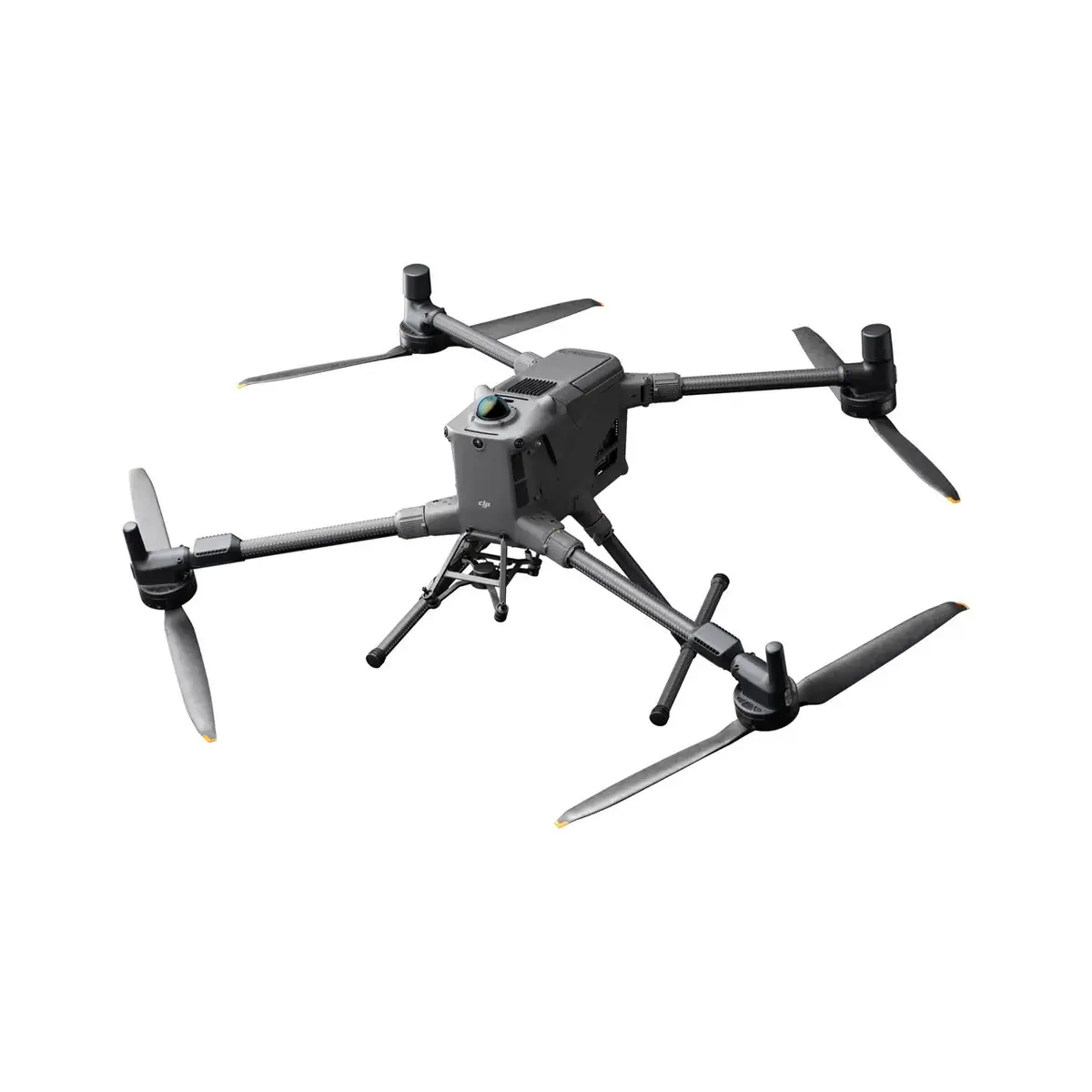
Our equipment includes the DJI Matrice 400. Flight platform and sensor are selected based on the asset, required detail, safety conditions and available space.
Industrial drone inspection – planning the inspection
Before an industrial drone inspection, we review environment, access, safety requirements and relevant checkpoints with the facility manager. Clear boundaries help us document the correct components and deliver material suitable for further technical assessment.