
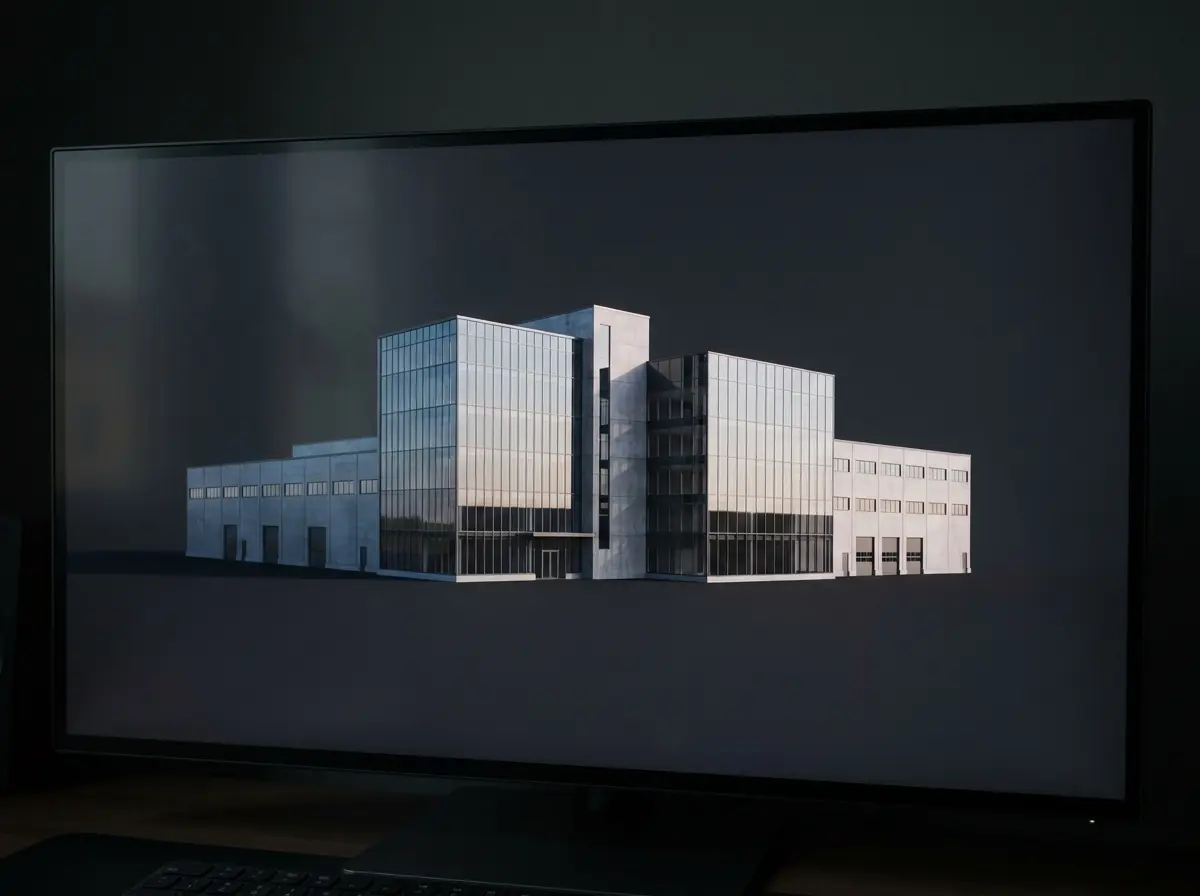
3D Model with Drone
Digital 3D Models for Buildings, Façades and Project Areas
A 3D model with drone provides a clear digital representation of a building, façade, roof, construction site, facility or land area. By collecting overlapping images from several angles, we can create a detailed model that makes it easier to understand shape, structure, surfaces and site conditions.
Unlike a standard photo, a 3D model gives a more complete view of the object or area. The client can rotate the model, review details, get a better overview and use the material as support for documentation, planning, project communication, technical review or further analysis.
We create 3D model with drone across Sweden and can carry out projects in Stockholm, Gothenburg, Malmö, Uppsala, Västerås, Örebro, Linköping, Norrköping, Jönköping, Gävle and other regions depending on the needs of the project.
What Is a 3D Model with Drone?
A 3D model with drone is usually created through photogrammetry. This means that the drone captures images of the object or area from many different positions and angles. The images are then processed in software that identifies matching points and builds a digital 3D model.
The result can be a visual 3D model, a mesh, a textured model or a technical dataset that can be combined with other deliverables such as orthophotos, point clouds or elevation data.
3D modelling with drone is especially useful when something is difficult, expensive or time-consuming to measure and document manually. This can include a high façade, a roof, a larger property, a construction site or an area where a clear digital overview is needed.
When Are Drone 3D Models Used?
Drone 3D models are used in projects where visual understanding and documentation are important. This can involve buildings, properties, cultural environments, roofs, façades, land areas, industrial facilities or projects where several stakeholders need to see and understand the same object or site.
A 3D model can be used to show what a place looks like, document existing conditions, compare changes over time or create a clear basis for discussion between clients, contractors, consultants, project managers and other stakeholders.
Common use cases include:
- 3D model of a building or property
- documentation of façades and roofs
- visualisation of construction sites
- support for planning and project communication
- technical documentation before or after a project
- presentation of land areas and facilities
- documentation of damages, details or changes
- complement to orthophotos, point clouds or surveying data
Benefits of 3D Modelling with Drone
One of the main benefits of 3D modelling with drone is that data collection can be carried out quickly and safely without requiring personnel to physically access every part of the object. For façades, roofs and hard-to-reach environments, the drone can collect image data from angles that would otherwise be difficult to capture.
A 3D model also makes technical information easier to communicate visually. Instead of working only with separate images, the client can receive a connected digital model that shows the full context.
A professional 3D model with drone can help you:
- get a clear digital overview of the object or area
- document buildings, roofs, façades and land areas
- improve communication between project stakeholders
- reduce the need for manual photography in hard-to-access places
- create visual material for planning and presentations
- complement technical deliverables such as orthophotos and point clouds
- monitor changes over time through recurring documentation
3D Model, Point Cloud or Orthophoto – What Is the Difference?
A 3D model with drone is mainly useful when you want to visualise and understand an object or area in three dimensions. It can be textured and provide a clear visual representation of a building, façade, facility or site.
A point cloud is more technical and consists of measured points in 3D. It is often used for measurement data, elevation data, terrain models, volume calculations and further processing in technical software.
An orthophoto is a scale-correct aerial image from above, used as a map base. It is especially useful for overview, planning, documentation and follow-up of land areas.
In many projects, these deliverables can be combined. One assignment can result in an orthophoto, point cloud and 3D model depending on what the client needs.
How the Process Works
Each assignment starts with a review of what needs to be modelled and what the 3D model will be used for. It is important to know whether the model is mainly intended for visualisation, documentation, technical review, presentation or as a complement to other deliverables.
The flight is then planned based on the shape of the object, surrounding environment, safety, lighting conditions, site access and required level of detail. A good 3D model requires images from several angles with sufficient overlap.
After the flight, the material is processed through photogrammetry. The images are matched, the model is generated and the delivery is adapted to the client’s needs. When required, the material can be complemented with orthophotos, point clouds, report images or other files.
Delivery and File Formats
The delivery depends on how the model will be used. For some projects, a visual 3D model for documentation and presentation is enough. For other projects, the client may need files for further processing in technical software.
Examples of deliverables include:
- textured 3D model
- 3D model for online viewing
- OBJ or other model formats when required
- point cloud as complementary data
- orthophoto as a complement
- high-resolution images
- simple documentation or report
- digital delivery through a secure link
We can adapt the delivery based on the project goal, available software and how the material will be used internally or together with other project stakeholders.
Accuracy and Limitations
A 3D model with drone can be very useful for documentation and visualisation, but it is important to understand the difference between a visual model and a technical measurement dataset. If the model will be used for measurement, project planning or technical analysis, the assignment needs to be planned with the right method, control points and accuracy requirements.
Surfaces such as glass, reflections, water, strong shadows or very low-texture materials can affect the result in photogrammetry. For this reason, the flight and image collection are planned according to the conditions on site.
We help you determine what level is needed. In some cases, a 3D model is enough. In other cases, it may be better to complement the delivery with a point cloud, orthophoto, LiDAR data or specific control points.
3D Model with Drone Across Sweden
We provide 3D model with drone across Sweden. Assignments can be carried out in larger cities such as Stockholm, Gothenburg, Malmö, Uppsala and Västerås, but also in smaller towns, industrial areas, construction sites, properties and land areas where the need exists.
Whether you need a 3D model of a building in Stockholm, a façade in Gothenburg, a roof in Malmö, a land area in Uppsala or a facility in another part of Sweden, we can create a workflow adapted to the project conditions.
Regulations, Dissemination Permits and Data Protection
When drone images are used to create 3D models, the assignment must be planned according to applicable rules. If the material is to be shared, published or sold, a dissemination permit may be required in Sweden.
It is also important to consider privacy and data protection if the image material may contain people, vehicles, residential areas or other information that needs to be handled carefully.
We work with structured planning, safety and data handling so that each assignment can be carried out in a professional way.
3D Models, Aerial Images and Dissemination Permits
When 3D models, aerial images or other geographic material collected by drone are to be shared, published or sold, a dissemination permit may be required in Sweden. This is why the material should be handled correctly from planning to delivery.
Lantmäteriet provides official information about dissemination permits for aerial images, videos, laser data, elevation data and other geographic material collected from the air.
Read more about dissemination permits at Lantmäteriet
Need a 3D Model with Drone?
Contact us if you need a 3D model for a building, façade, roof, land area, facility, project planning or technical documentation.
We review the object, the purpose of the model, the required level of detail and which delivery format is most suitable for your project.