
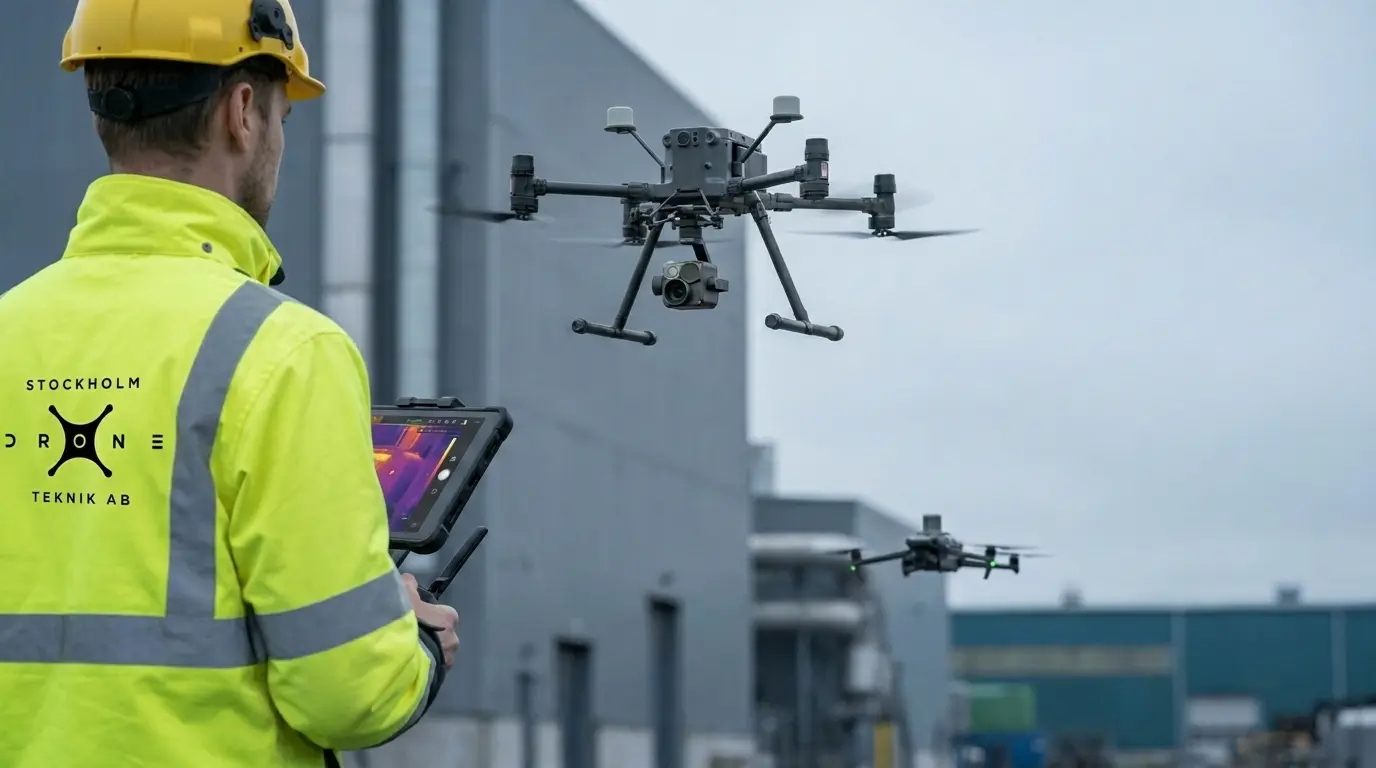
Professional drone inspection for construction, real estate, industry and infrastructure across Sweden. Fast, safe and data-driven analysis without risky manual inspections.
Drone inspection & Monitoring
Stockholm Drone Teknik AB provides drone inspection services for construction, real estate and industrial projects across Sweden. The method is used when traditional inspection solutions are time-consuming, risky or costly.
By replacing scaffolding, lifts and manual checks with drone technology, inspections can be carried out faster, safer and with a higher level of detail. This is especially useful for tall buildings, complex structures and technical installations where access is otherwise limited.
The focus is not only on data collection. Each assignment is carried out with a clear purpose: to deliver a technical basis that can be used directly for decisions, planning or maintenance. The result is a more efficient process where problems can be identified earlier and measures can be planned with greater precision.
When Is Drone Inspection Used?
Drone inspection is used in situations where access, safety or time are critical factors.
Typical use cases include:
→ inspection of tall facades and buildings
→ checking roofs, waterproofing and drainage systems
→ analysis of operational solar panel systems
→ industrial installations and energy facilities
→ infrastructure and technical structures
The method is especially relevant in projects where downtime must be avoided or where exposure to risk for personnel should be minimized.
What We Inspect
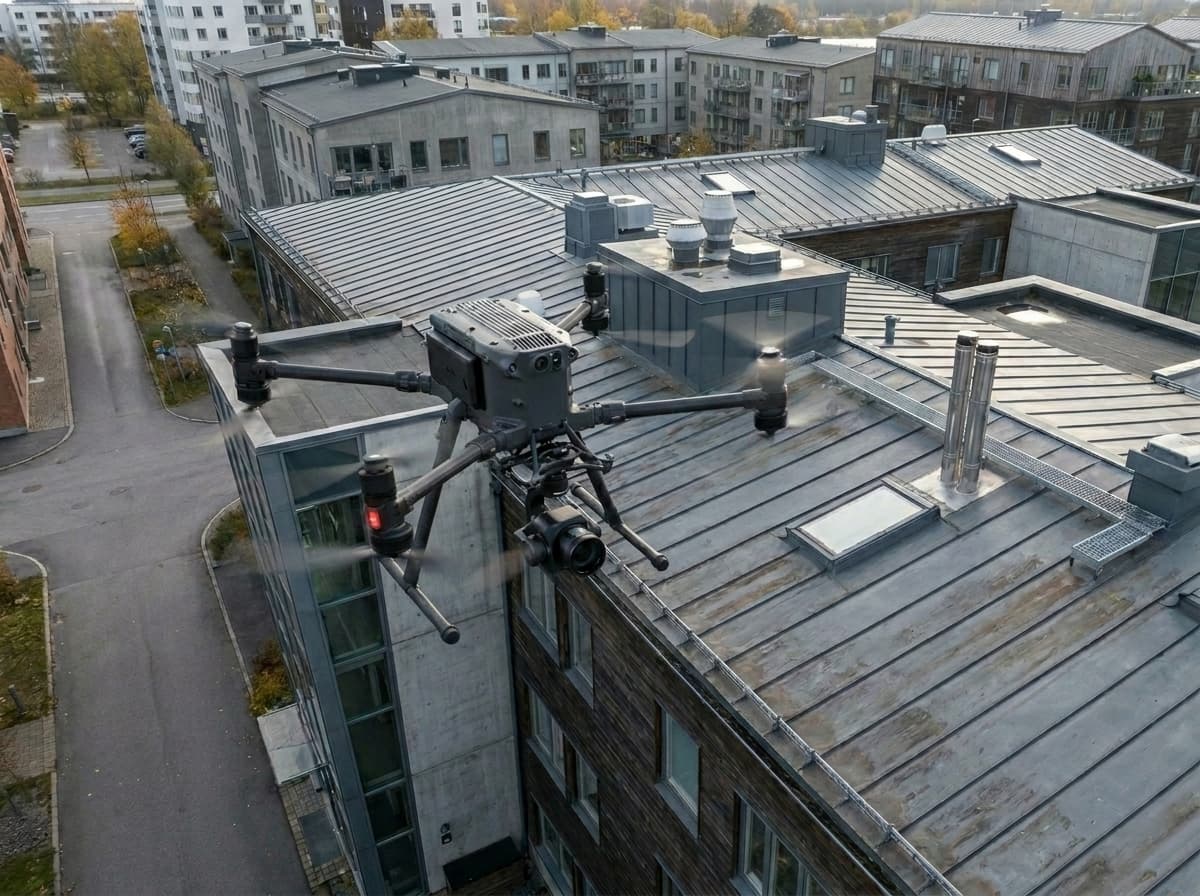
Roof Inspection with Drone
Roof inspection is used to detect damage at an early stage, before it develops into more extensive problems. This includes checking waterproofing, penetrations, connections and drainage systems.
With thermal imaging, moisture intrusion and heat loss can also be identified, providing a more complete basis for decision-making than visual inspection alone.
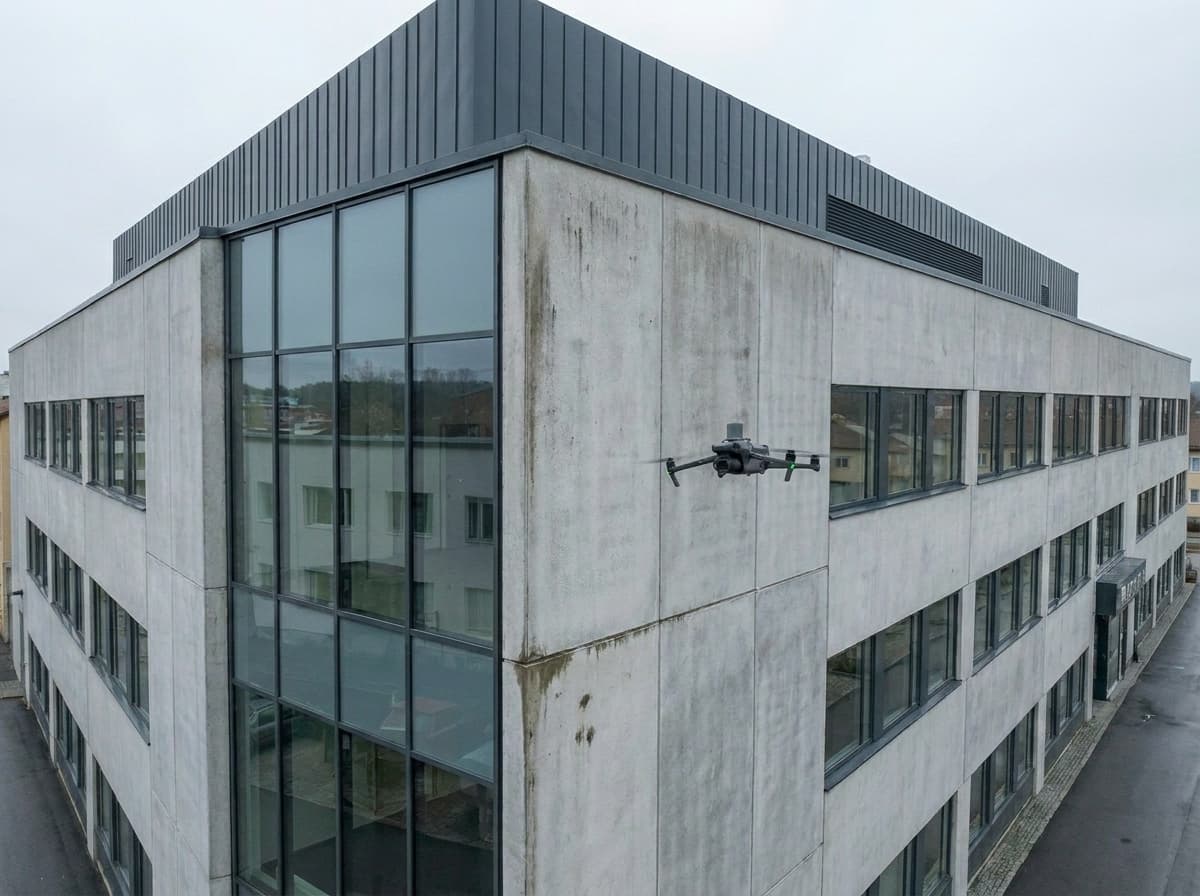
Facade Inspection with Drone
Facade inspection is used to identify cracks, moisture damage, joint issues and material wear. The drone enables documentation of entire facade surfaces with a high level of detail, providing a complete view of the building’s condition.
The method eliminates the need for scaffolding and makes it possible to carry out inspections without disrupting activity inside the property.
The delivery consists of structured image documentation and analysis that can be used as a basis for repairs, maintenance or technical assessment.
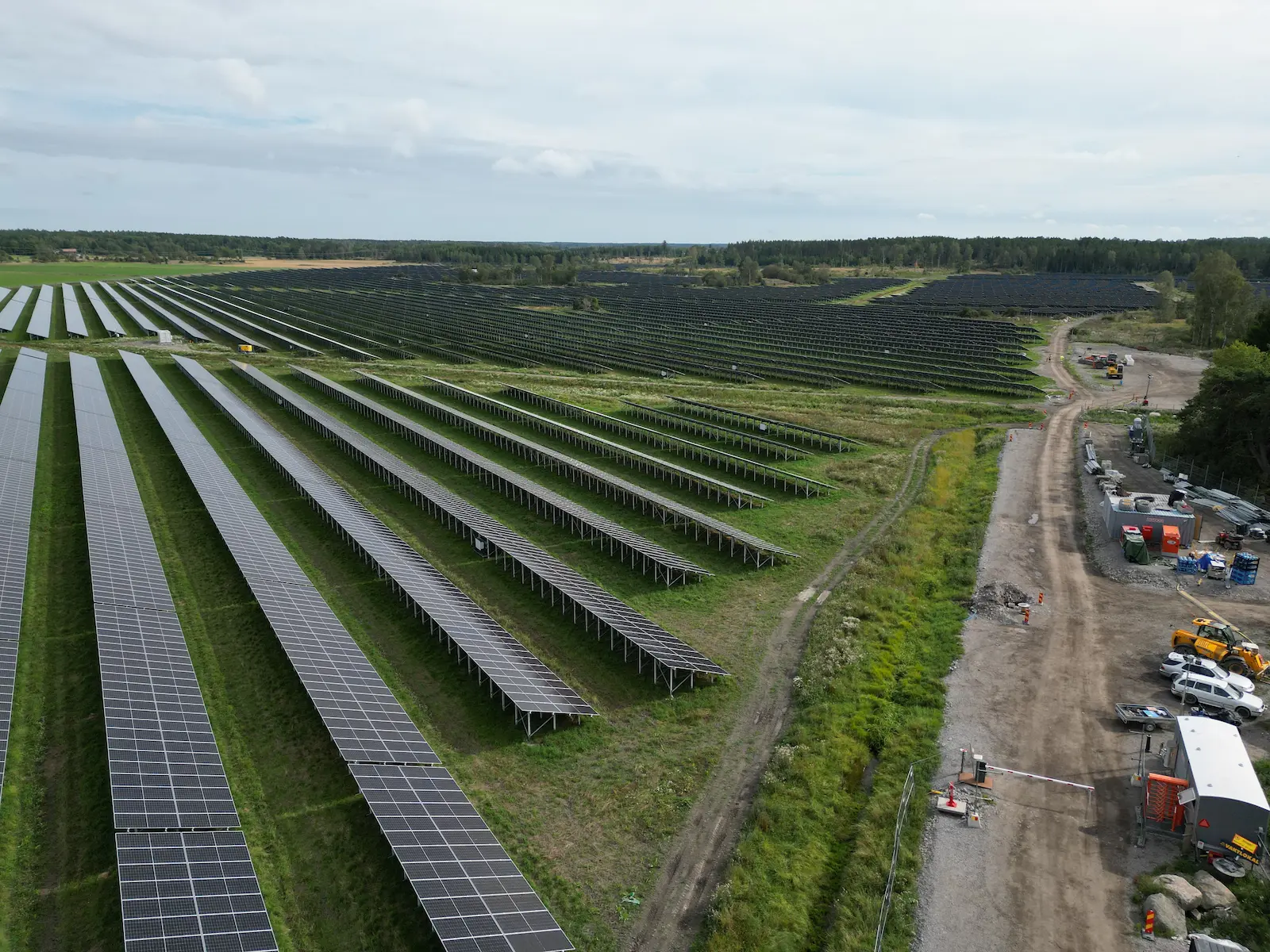
Solar Panel Inspection with Thermal Imaging
Solar panel systems require regular checks to ensure optimal performance. Through thermal inspection, defective panels, hotspots and electrical anomalies can be identified without taking the system out of operation.
This makes it possible to locate problems quickly and minimize production losses.
The result can be used directly for troubleshooting, maintenance planning and warranty claims.
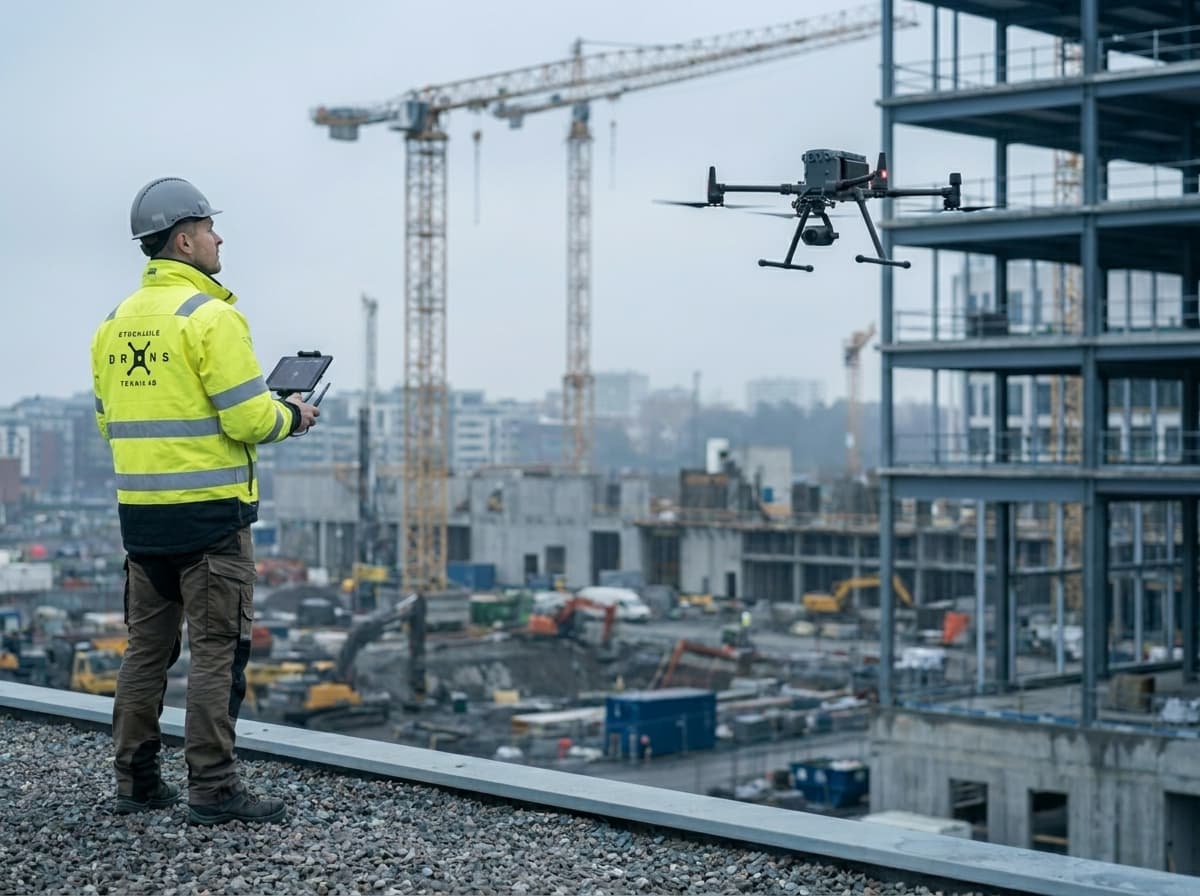
Building Inspection and Project Control
Drone inspection is used in construction projects to monitor progress, document status and identify deviations in time.
The method provides an objective overview of the project and improves communication between contractors, clients and project management.
When needed, 3D models and point clouds can also be generated for further analysis of structures and geometries.
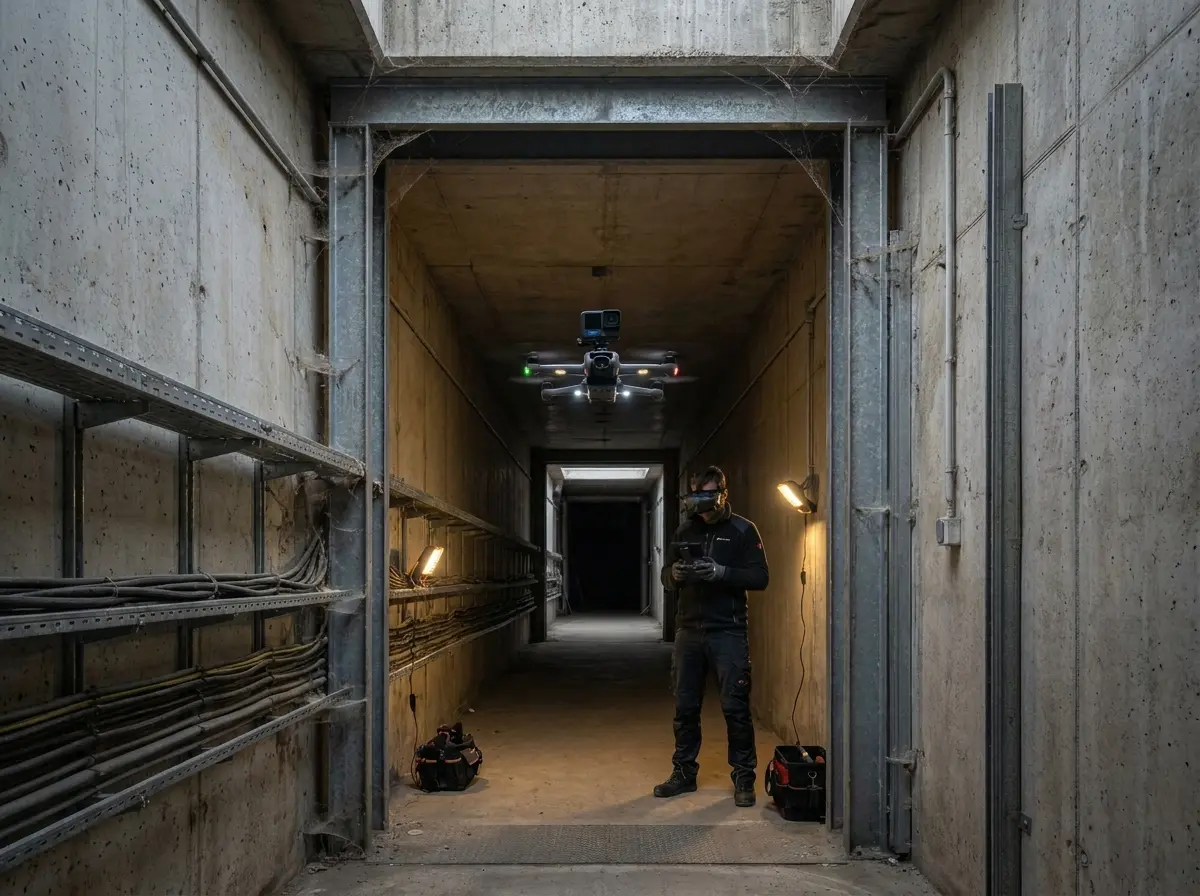
Ventilation and Technical Installations
Inspection of ventilation systems, shafts, chimneys and technical installations often requires access to hard-to-reach spaces.
Drone technology enables safe and efficient checks without dismantling or risky work procedures.
This is especially relevant in densely built environments where traditional methods are limited.
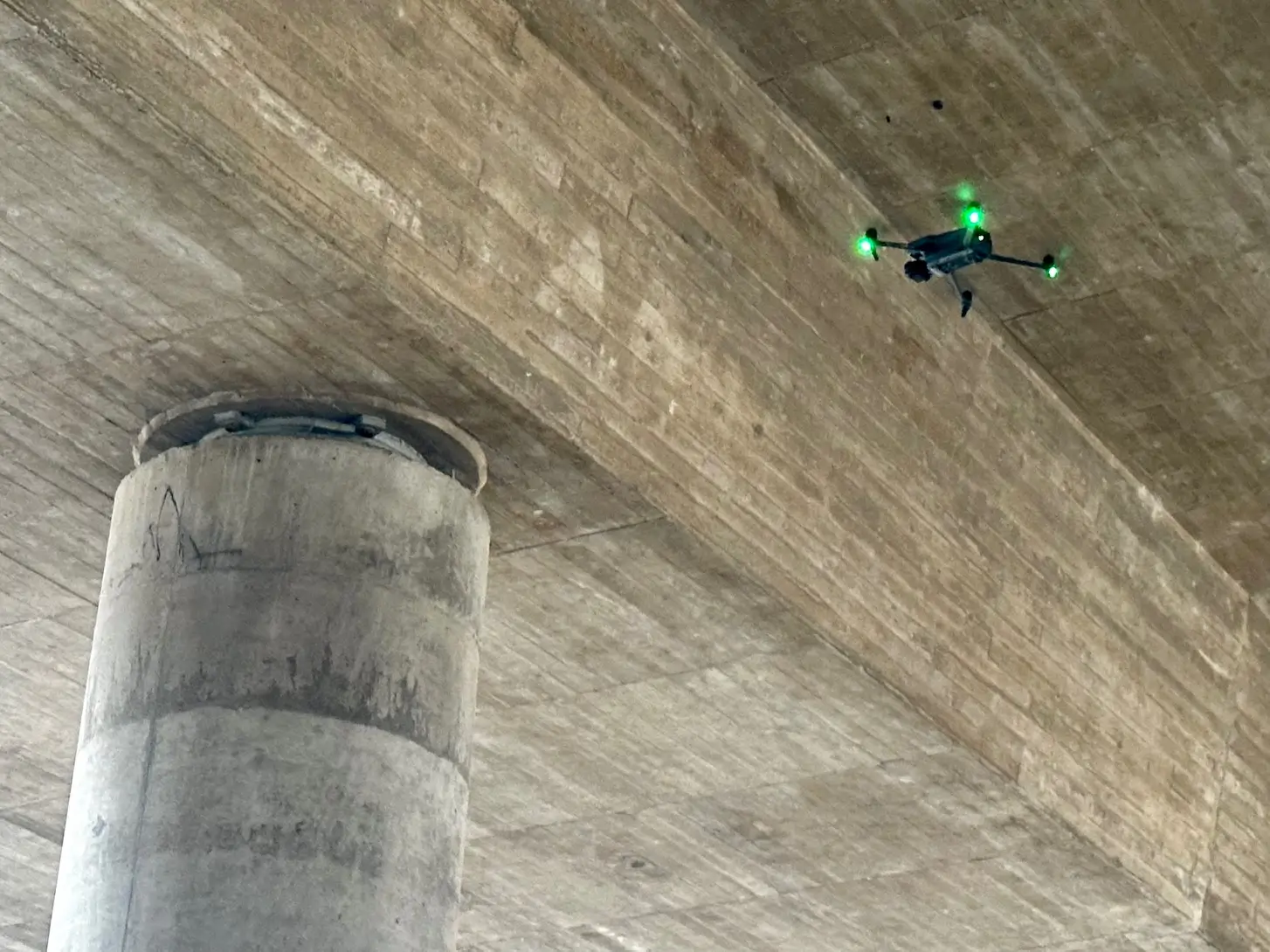
Industrial Inspection
In industry and energy, drone inspection is used to inspect structures, installations and facilities where safety and precision are critical.
This includes factories, production facilities and energy systems where continuous operation must be maintained.
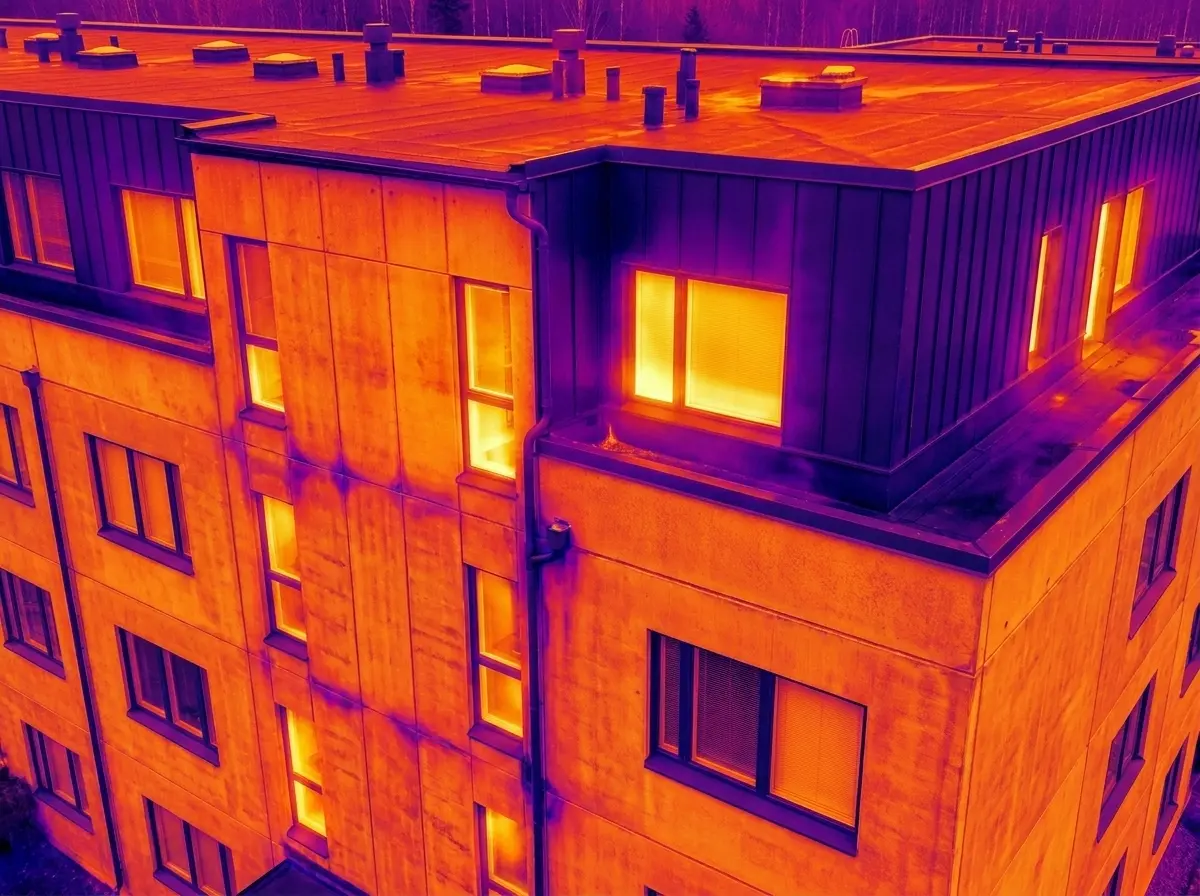
Thermal Inspection
Thermal imaging is used to identify anomalies that are not visible to the naked eye.
This includes:
→ energy losses
→ moisture damage
→ electrical faults
→ thermal deviations in structures
The method is used as a basis for energy analysis, maintenance planning and technical evaluation.
Underwater Inspection
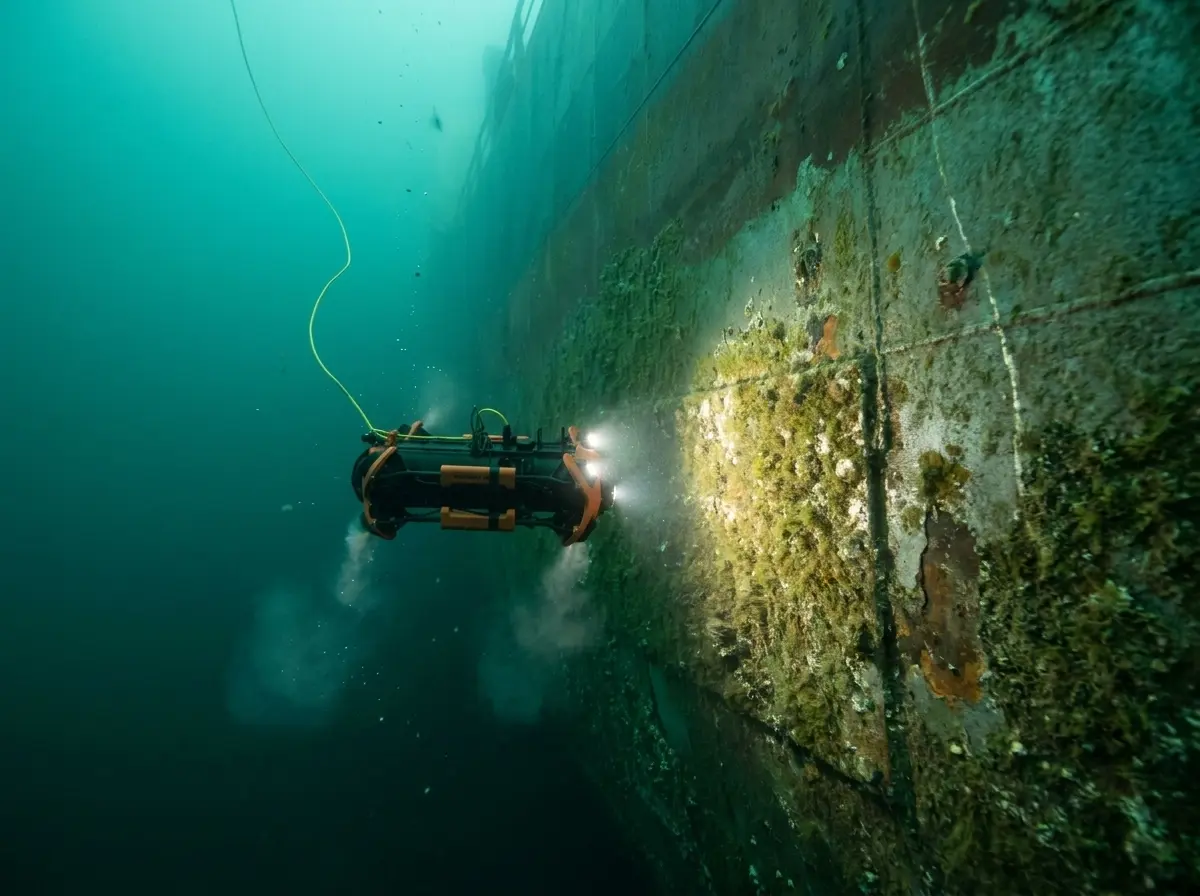
For inspections in underwater environments, we use ROV systems, remotely operated vehicles that enable safe and detailed inspection without the need for diving operations.
The method is used to inspect structures such as docks, quays, foundations and other installations below the water surface. The ROV is equipped with a high-resolution camera and powerful lighting, providing clear documentation even in environments with limited visibility.
We also inspect vessel hulls below the waterline, for example to identify damage, marine growth, corrosion or maintenance needs.
The result is delivered as structured image or video documentation that can be used directly for technical assessment, maintenance planning or further analysis.
Drone Monitoring
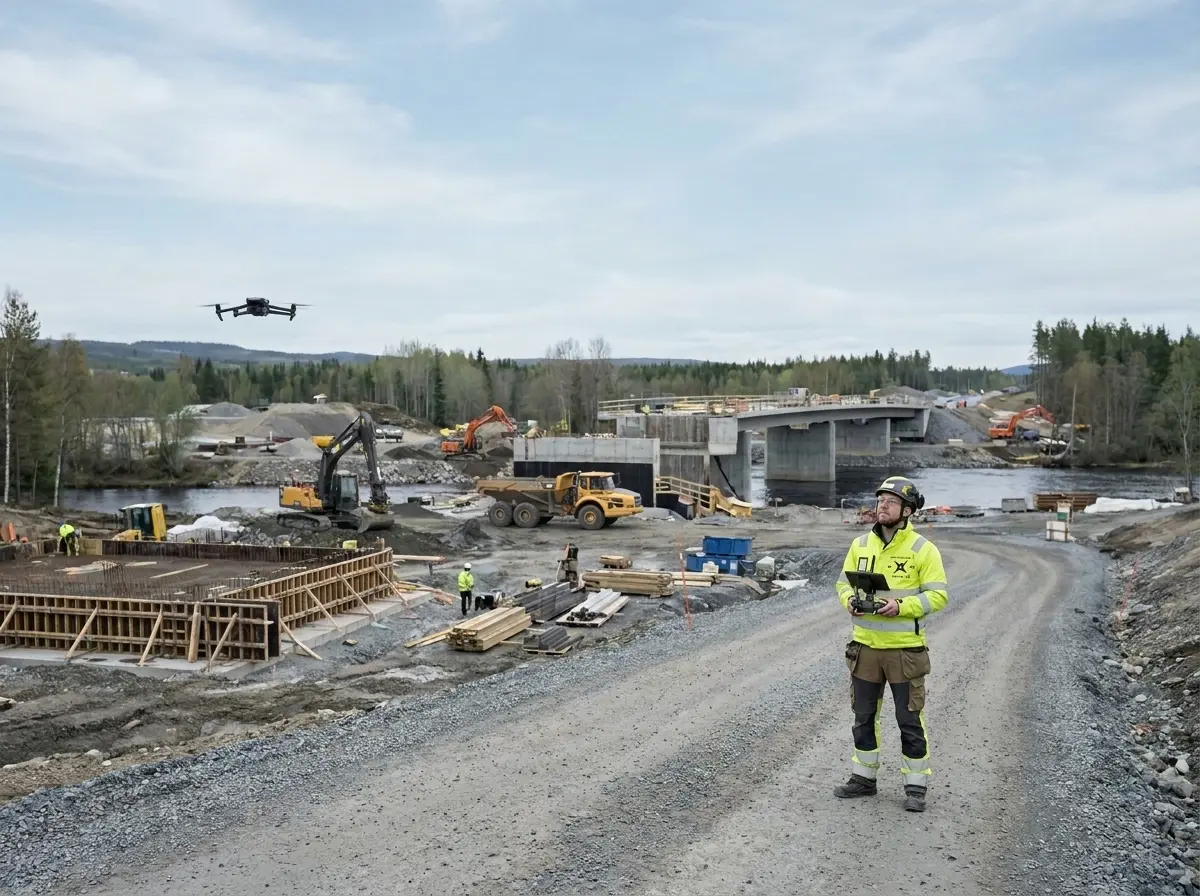
In addition to one-time inspections, we also provide drone monitoring for projects that require ongoing follow-up.
This is used, for example, in:
→ construction sites
→ larger infrastructure projects
→ safety-related applications
Regular flights provide a continuous and objective view of the project’s development.
All inspections are carried out in accordance with current regulations from the Swedish Transport Agency for safe and legal drone operations.
Professional drone inspection provides a fast, safe and cost-effective solution for analysing buildings, roofs, facades and infrastructure. With drone inspection, we collect detailed data without the need for scaffolding, lifts or risky manual work.
Using modern drone technology, high-resolution cameras and advanced sensors, we can identify damage, wear and potential issues at an early stage. Drone inspection makes it possible to plan measures in time and avoid unnecessary costs.
Our drone inspection services are used for properties, industrial facilities, bridges, roofs and solar panel systems. We reach hard-to-access areas quickly and safely, while minimizing disruption to ongoing operations.
After each drone inspection, we deliver clear documentation in the form of images, video and, when needed, analysed reports. This provides a concrete basis for maintenance, renovation and technical evaluation.
All drone inspection assignments are carried out in accordance with current regulations and with a strong focus on safety. With our technical expertise and experience, you receive a reliable and professional solution.
Choose drone inspection for better control, higher precision and more efficient projects. Contact us for a solution adapted to your needs.