
Drone solar panel thermal inspection
Identify anomalies in solar panel systems
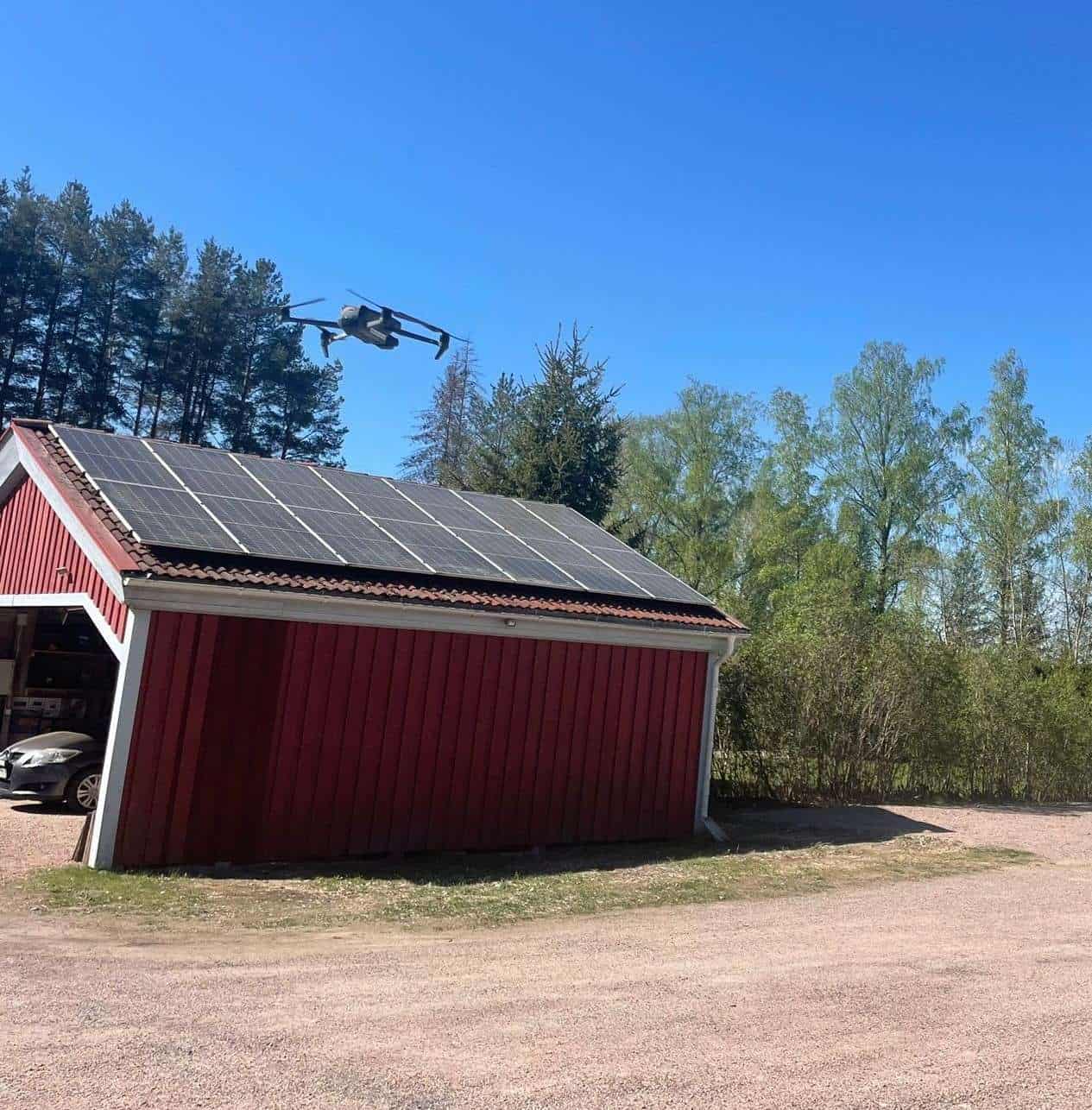
Identify abnormal solar modules before they become a larger maintenance problem. Stockholm Drone Teknik AB offers drone solar panel thermal inspection for solar farms, commercial properties, industrial roofs and other solar installations throughout Sweden. Radiometric thermal imagery and high-resolution RGB photography provide clear, geographically referenced information for operators, installers and property owners.
Why choose drone solar panel thermal inspection?
PV installations can generate electricity even when individual cells, modules or strings have anomalies. Ordinary visual checks may not show temperature patterns indicating electrical issues or local power losses.
Drone thermography allows systematic inspection of large areas during normal operation. Anomalous modules can be located without staff walking every panel row or working on roofs. Results help prioritise further checks and plan maintenance.
What anomalies can solar panel thermal inspection detect?
- Hotspots: locally elevated temperature in a cell or part of a module.
- Anomalous modules: temperature patterns differing from neighbouring panels under comparable conditions.
- Bypass diodes and strings: patterns that may indicate abnormal electrical function, disconnected modules or strings.
- Shading and soiling: visual documentation of external influences that can contribute to thermal anomalies.
- Possible damage: anomalies warranting closer inspection of cells, connections or module condition.
A thermal anomaly is an indication, not a conclusive diagnosis. Reflections, shadows, wind and variable irradiance can affect images. We therefore assess thermal and visual material together and recommend further electrical troubleshooting when needed.
Measurement conditions under IEC TS 62446-3
The quality of a drone solar panel thermal inspection largely depends on flight conditions. We plan the inspection using IEC TS 62446-3, which describes outdoor thermography of operating PV modules and systems.
- Solar irradiance: we aim for at least 600 W/m² during normal thermal inspection and document measurements throughout the assignment.
- Stable operation: the system must operate normally and conditions must be sufficiently stable for comparable measurements.
- Weather and wind: passing clouds, wind, precipitation and temperature changes can affect results. Flights are paused or rescheduled if conditions are inadequate.
- Image quality: flight altitude, camera angle, distance and speed are adapted to module size and required detail.
How we perform the inspection
1. Planning and preparation
We review the system layout, installed capacity, available panel and string identifiers and reporting requirements. Flight area, weather, safety requirements and any permissions are checked before the assignment.
2. Flight and data collection
We use professional drones with radiometric thermal cameras, such as the DJI Mavic 3 Thermal, collecting thermal and RGB images. Larger solar farms can be surveyed in sections. Irradiance and relevant environmental conditions are recorded.
3. Analysis and location
Images are reviewed to identify thermal anomalies. Observations are compared with neighbouring modules and visual conditions. Where needed, findings are linked to maps, panel numbers or facility identifiers.
4. Reporting and follow-up
We compile observations into documentation that operations and maintenance staff can use to prioritise action. A follow-up inspection after repair can be agreed to document changes.
What your deliverables may include
- Thermal and visual images of inspected areas.
- Overview map or georeferenced locations of documented anomalies.
- Report with image references, descriptions and relevant measuring conditions.
- Summary of observations for prioritised further checks.
- By agreement: orthophotos and additional GIS-compatible mapping data.
Deliverables are adapted to project size, available system data and client requirements. Thermal reporting does not replace electrical safety inspections, insulation testing or other electrical tests.
Solar farms and rooftop systems throughout Sweden
We help energy companies, solar installers, managers and property owners inspect ground-mounted and rooftop PV systems. Together with our services in thermal drone inspection, drone orthophotography and drone solar panel cleaning we can tailor documentation to each system’s maintenance requirements.
Frequently asked questions about drone solar panel thermal inspection
Does it have to be sunny during inspection?
Yes, sufficient and stable solar irradiance is important for useful temperature contrast. We monitor forecasts and check on-site conditions before collecting data.
Can you inspect both solar farms and rooftop solar panels?
Yes. Flight planning is adapted to location, geometry, safety conditions and required detail.
Can you measure exactly how much electricity a defective panel loses?
Thermography shows temperature patterns and helps identify suspected anomalies. Exact energy loss normally requires additional electrical measurements or production data analysis.
How much does a solar panel inspection cost?
Price depends on system size, accessibility, flight conditions and report scope. We provide a tailored quote after reviewing your project.
Book a solar panel inspection with Stockholm Drone Teknik
Please send the system address, installed capacity or panel count, mapping data and preferred schedule. We can propose a suitable inspection method and deliverables for your installation.
Drone solar panel thermal inspection – follow-up of anomalies
During a drone solar panel thermal inspection, observed temperature anomalies are linked to module locations. The documentation helps prioritise electrical checks and, if needed, plan a new survey under suitable conditions. Thermal inspection complements other technical troubleshooting.
Planning a drone solar panel thermal inspection
Before a drone solar panel thermal inspection, the site operator can share a current module layout and identify sections that have shown unusual production data. For a repeat drone solar panel thermal inspection, we discuss how to identify the same modules in both surveys. This helps the maintenance team compare observations without mistaking changes in weather or operating conditions for changes in module behaviour.