
Drone ventilation inspection and technical installations
Documentation of hard-to-reach installations
Stockholm Drone Teknik AB offers drone ventilation inspection and inspection of technical installations. The method provides visual documentation of hard-to-reach areas such as roof-mounted ventilation units, chimneys, openings and shafts where flights can be conducted safely.
What can be inspected?
We document the external condition of ventilation hoods, grilles, ducts, fixings, penetrations and other visible installations. Images can reveal corrosion, visible damage, loose parts, contamination and obstructions that require further investigation.
Inspection of shafts and confined spaces
Each object is assessed based on geometry, opening sizes, lighting, airflow, radio signal and risk of contact with the structure. Internal inspection is only performed when appropriate equipment and safe flight conditions can be ensured. Where drones are unsuitable, another inspection method is recommended.
Thermal and visual documentation
High-resolution RGB images document visible anomalies. Where appropriate, a radiometric thermal camera can complement visual inspection by showing temperature differences on accessible surfaces. Thermography alone cannot establish air leakage, airflow or the cause of an anomaly.
A method for maintenance planning
Drone inspections can help property owners, ventilation contractors and maintenance managers prioritise further investigation and service. They do not replace mandatory ventilation checks (OVK), airflow measurement or internal technical inspection.
How the assignment works
We review the location, access, operating conditions and parts to document. Flight planning is coordinated with the responsible person on site. After the assignment, overview images, detailed photographs and marked observations can be delivered as agreed.
Request a quote for ventilation inspection
Send the facility address, installation type, height and any drawings or photographs. We assess the method, feasibility and required documentation before quoting. Read about our other drone inspection services.
Drone ventilation inspection – which parts can be documented?
Drone ventilation inspection is useful when components are positioned on high roofs or places that are difficult to overview from the ground. Clients may need to see how roof hoods are positioned, whether visible fixings have changed or whether covers and connections show damage. Overview photographs are combined with detail shots when conditions permit.
Checking roof-mounted ventilation installations
Where several installations are present, we can plan image collection according to a checklist. Labels, drawings or client photographs help identify the correct objects and make the deliverable easier to interpret. If parts are obscured by other installations, additional camera angles or another inspection method may be required.
Technical installations in hard-to-reach environments
External visual inspection and internal inspection are different tasks. A drone cannot automatically inspect every type of ventilation duct. Narrow passages, airflow, dust, radio conditions and moving components may make flight unsuitable. We assess the assignment before booking and coordinate preparations with the responsible operator.
Documenting observations and maintenance needs
Images can provide a better overview before service, repair or investigation. When documenting a visible change, identify the installation and camera direction. Repeat inspection allows comparison with previous images. Decisions about function, corrective action and technical safety must rely on the responsible specialist’s assessment.
Ventilation inspection and mandatory ventilation checks
Our service provides image-based documentation. It does not replace OVK, a specific inspection of ventilation system function. For information about rules and responsibilities, see Boverket. If technical function measurements are needed, coordinate the drone inspection with a ventilation consultant or qualified inspector.
Frequently asked questions about ventilation inspection
Must ventilation be switched off? It depends on location, operating conditions and risks. We assess this with the facility manager. Can several installations be inspected together? Yes, where conditions allow, several objects may be included in one planned assignment. What is needed for a quote? Address, images or drawings, a description of the installations and the parts to be reviewed.
Ventilation inspection for maintenance
Before a ventilation inspection, we identify the components to document, accessible openings and any limitations in the space. Images help locate visible damage, contamination and obstructions. Drone documentation does not replace mandatory ventilation checks (OVK) or airflow measurements.
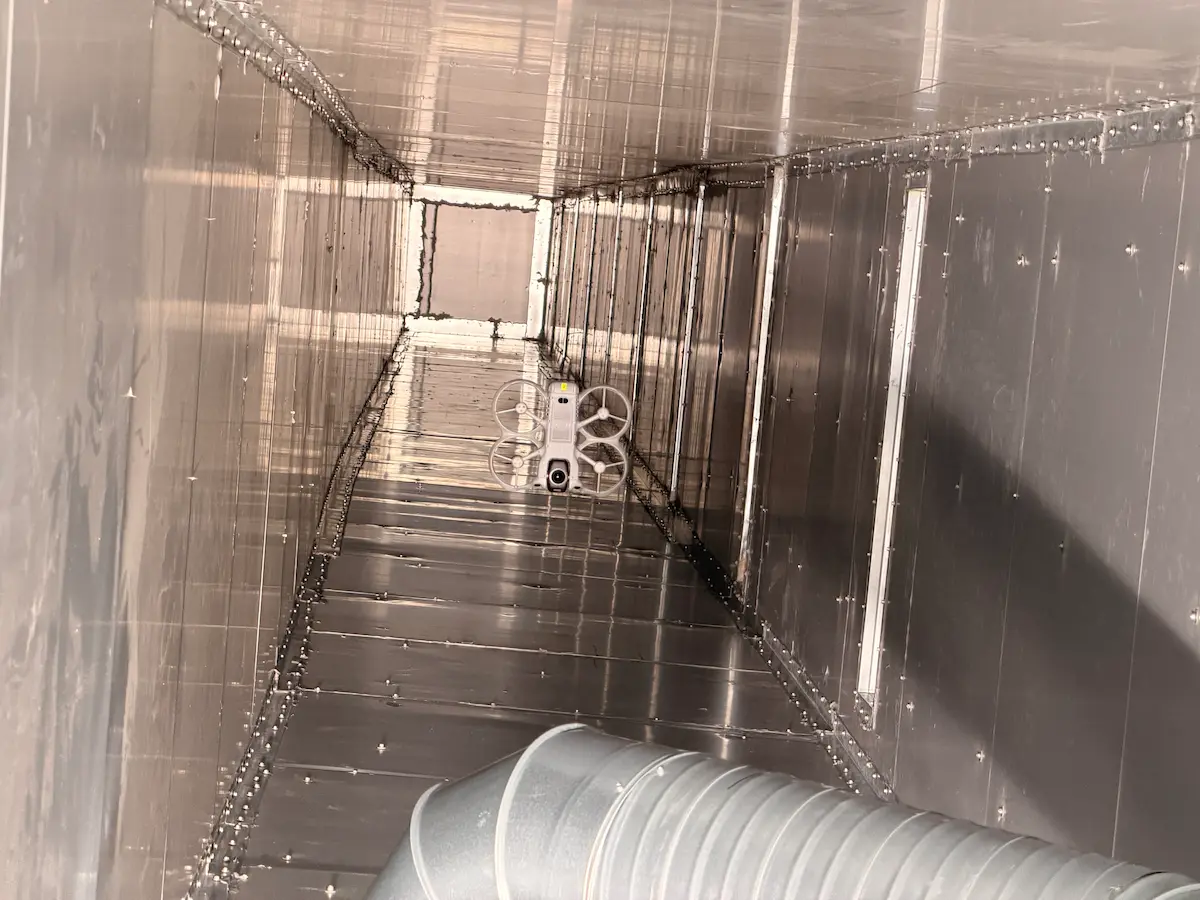
Example of documentation of a ventilation shaft from a completed project. Images help the responsible technician decide which parts require further investigation.
Ventilation inspection before maintenance
During a ventilation inspection, accessible parts are documented according to project conditions. Images can help identify visible obstructions, damage or changes requiring further investigation. The inspection does not replace mandatory ventilation checks or other measurements needed to assess facility function.
Drone ventilation inspection for technical teams
Before a drone ventilation inspection, the responsible technician should identify the accessible parts of the installation and the areas of particular concern. Follow-up drone ventilation inspection can document the same selected components after maintenance, where access and operating conditions permit. The visual record supports maintenance planning and can help identify locations requiring a closer physical inspection.