
Professional drone inspection training
Drone inspection training with Stockholm Drone Teknik AB. Learn how to plan and carry out professional drone inspections of roofs, façades, solar installations and technical environments. The course combines flight safety, inspection methodology and structured reporting.
What you will learn
- Inspection planning and safety
- sensor selection, viewing angles, distance and lighting
- systematic visual documentation
- thermal imagery considerations
- image organisation, observations and reporting.
Practical workflow and applications
An inspection is more than a collection of close-up images. Start by identifying the customer’s question, the surfaces to document and potential obstacles. Capture overview and detail images so observations can be located later, and record areas that could not be inspected. Thermal imaging requires attention to material properties, reflections, weather and environmental conditions. Review coverage and image sharpness before leaving the site where possible; preserve originals and distinguish observations from specialist diagnoses.
Who is this course for?
Drone pilots, property managers, technicians, construction companies and inspection personnel. Basic flying experience is an advantage.
Course duration and price
SEK 8,800 per person excluding VAT · 2 days
15% company discount for more than two participants from the same company. Training does not replace specialist building diagnostics or thermography certification. Contact us to discuss your experience and required level.
Further information and bookings
Find additional information at the relevant official resource. Explore all our drone training courses. Contact Stockholm Drone Teknik AB for course dates and arrangements.
Drone inspection training from planning to reporting
An inspection should produce information that helps the customer answer a defined question. Before planning a flight, establish which surfaces must be documented, how detailed the images need to be and whether the site is accessible. A roof and a façade often require different viewing angles, camera settings and flight plans. Assess obstacles, people, traffic and environmental conditions and choose a safe strategy, including how to abort the operation.
Visual and thermal documentation
A visual image and a thermal image provide different kinds of information. A visible anomaly may need further examination before anyone can determine its cause. Thermal measurements can be affected by material properties, reflections, weather and environmental conditions. Make sure that the circumstances of acquisition are recorded, and do not draw conclusions beyond the available information. Drone inspection training focuses on the acquisition and organisation of relevant documentation, not on replacing specialist diagnoses.
A façade inspection scenario
Suppose a customer needs images of a building façade where access from the ground is difficult. Begin by identifying priority areas, possible obstructions and safe flight positions. Capture overview images so that individual observations can be located, and obtain detailed images where the flight conditions permit. If a surface cannot be inspected safely, record this explicitly in the report. This gives the customer a clearer understanding of the completeness of the inspection.
Delivering useful inspection results
Inspect image quality and coverage before leaving the site whenever possible. Check that the key areas have been documented and that observations can be located afterwards. Organise images according to the building or object, with overview and detail views. Preserve originals separately from edited copies and describe any adjustments. The report should clearly distinguish an observation from a technical assessment that requires specialist expertise. The methods covered in our drone inspection training help make reports usable, transparent and comparable over time.
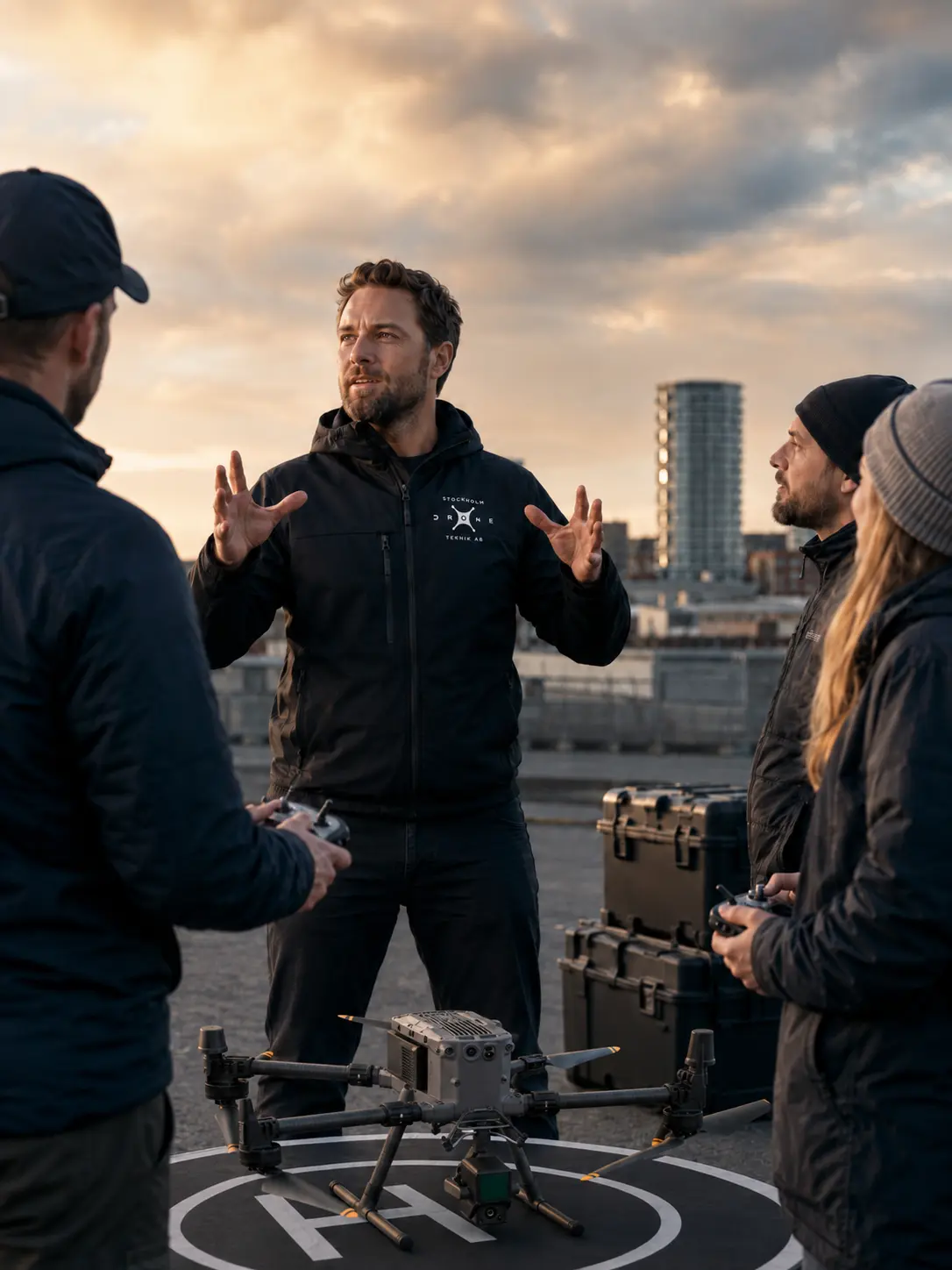
Preparing for your course
In a roof inspection, first discuss whether the client needs a general overview or documentation of specific defects. Establish the relevant surface area, camera angle and image resolution before flying. Review the images after acquisition and identify any missing areas. A structured record of observations allows the client or specialist to investigate further. The course also explains the importance of preserving originals and communicating limitations in the final report.