
Starting a drone business – professional course
Starting a drone business with Stockholm Drone Teknik AB. Turn drone skills into a structured business. This one-day course explores how drone services can solve real customer problems, how to price projects and how to deliver professional results.
What you will learn
- Photography, video, documentation, inspection and mapping
- selecting aircraft, sensors and software
- quotations and pricing
- customer communication
- safety planning and delivery requirements.
Practical workflow and applications
A sustainable drone business starts with the customer’s objectives. A property manager may need roof documentation, whereas a contractor may require measurable survey data. Define the deliverable, clarify what is included, estimate travel, planning, flight, insurance, processing and storage, and document limitations before quoting. Consider equipment investments against actual demand rather than buying advanced hardware immediately.
Who is this course for?
Drone pilots, content creators, entrepreneurs and small businesses developing or expanding drone services.
Course duration and price
From SEK 2,500 per person · 1 day
You do not need to own a business already. The course provides knowledge and practical examples, not a guarantee of commercial success. Supporting material is included.
Further information and bookings
Find additional information at the relevant official resource. Explore all our drone training courses. Contact Stockholm Drone Teknik AB for course dates and arrangements.
Starting a drone business with a clear offer
A sustainable business begins with choosing a customer problem you can solve. For instance, a property manager needs images that document the condition of a roof, while a construction company may need georeferenced data. Both are drone assignments, but the equipment, planning, reporting and deliverables differ. Define exactly what the customer will receive and what limitations apply. It is easier to establish a fair price when everyone understands the scope of work.
Estimating project costs
A flight is only one part of a professional assignment. Consider travel, site assessments, permits where relevant, insurance, equipment maintenance, data storage and post-processing. Distinguish fixed costs from project-specific expenses and allow realistic time for each stage. Weather can prevent a planned operation, so make clear how rescheduling will be managed. Starting a drone business means learning to price the full service, not only the time spent in the air.
Choose equipment according to demand
Purchasing a sophisticated aircraft before identifying the projects you want to pursue may create unnecessary costs. Start with the technical requirements of your chosen service. Consider which sensors are appropriate, how data should be processed and what skills your company needs. Compare expected utilisation with acquisition, maintenance and training costs. Build up competence and investment progressively rather than assuming one drone can perform every professional task.
From quotation to delivery
When a customer asks for a quote, clarify the desired result before deciding whether an assignment is feasible. Document target surfaces, file formats, deadlines and any limitations. Plan flying operations with safety in mind, review the collected material and ensure the customer can use the deliverables. After the project, evaluate what went well and what needs improvement. These steps form a repeatable workflow for starting a drone business. Supporting course material helps participants develop a structure appropriate to their own services.
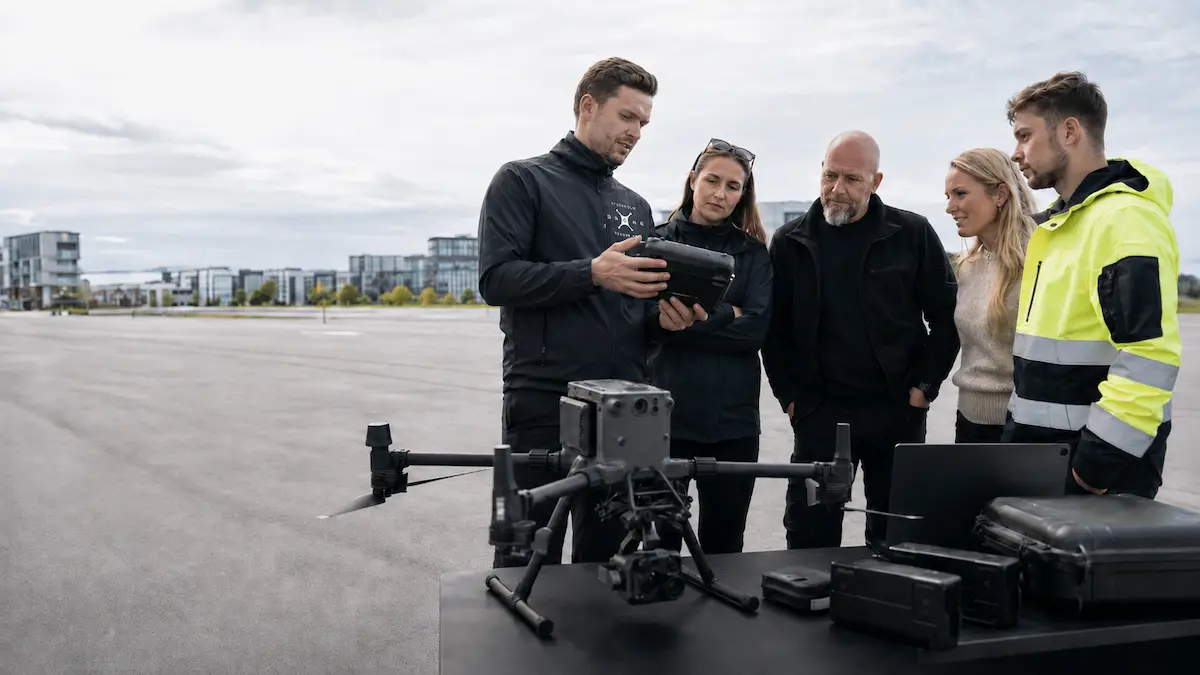
Preparing for your course
An effective business plan should also identify customers, the service scope and the skills required for each assignment. Consider whether recurring projects or one-off contracts suit your capacity. Make clear which services you perform yourself and which require specialist partners. Use the course to review a realistic project budget covering preparation, travel, data acquisition, software, processing and delivery. Build a portfolio that demonstrates your capabilities without promising results you cannot substantiate. A structured handover and follow-up helps establish repeatable work.