
Thermal drone inspections to detect energy loss and moisture damage
Thermal drone inspection – detecting energy losses and hidden damage
Energy efficiency is essential in construction and property management. Aerial thermal inspection helps property owners and construction companies identify indications of energy losses, moisture and structural defects without costly manual inspections. Advanced thermal cameras provide detailed images to support planning and corrective action.
How does a thermal drone inspection work?
A drone equipped with a thermal camera records temperature variations on a building’s surface. Differences may indicate energy losses caused by poor insulation, draughty windows, damaged roofs or hidden leaks. We analyse the thermal data and visualise it as colour maps so warmer and cooler areas can be identified.
Common problems associated with energy losses
- Insufficient insulation in walls, roofs and floors.
- Leaks around windows and doors resulting in unnecessary heating or cooling.
- Signs of moisture that may be associated with mould and poorer indoor air quality.
- Thermal bridges that increase energy consumption.
Benefits of aerial thermal inspections
- Fast and cost-effective – large surfaces can be inspected quickly.
- Safety – reduces work at height and in hard-to-reach places.
- Detailed documentation – thermal imagery and reports to support corrective action.
- Environmental benefits – reducing energy losses helps reduce carbon dioxide emissions.
What equipment do we use?
We use advanced drones such as the DJI Mavic 3T and DJI Matrice 30T, equipped with high-resolution thermal sensors. This enables measurements from a distance and under challenging lighting conditions.
Applications in different sectors
- Properties: locate heat leaks and optimise energy consumption.
- Industrial facilities: detect overheating components before they cause downtime.
- Construction sites: assess the quality of insulation work.
Application example
A thermal inspection of an apartment building may reveal heat loss through draughty windows and roofs. Addressing these deficiencies can reduce energy consumption. We also carry out similar inspections on bridges and infrastructure to identify anomalies invisible to the naked eye.
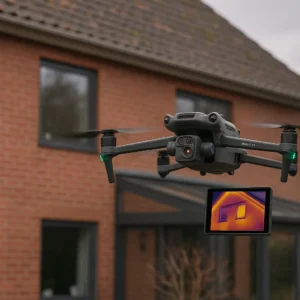
Aerial thermography helps detect indications of energy losses and hidden damage. With suitable equipment and expertise, we provide detailed analysis that supports energy and cost savings and a more sustainable future.
How we can help
At Stockholm Drone Teknik AB, we have the expertise and equipment to perform accurate and safe thermal inspections. Mavic 3T drones equipped with high-resolution thermal cameras help identify signs of energy loss, moisture ingress and other anomalies with minimal disruption to your operations.
We are certified remote pilots in the specific category and have documented project experience across different scales. Whether for a private home, commercial property or industrial facility, we provide high-quality results to support informed decisions.
Contact us today for a free consultation to discuss optimising energy use, reducing operating costs and extending the life of your buildings.
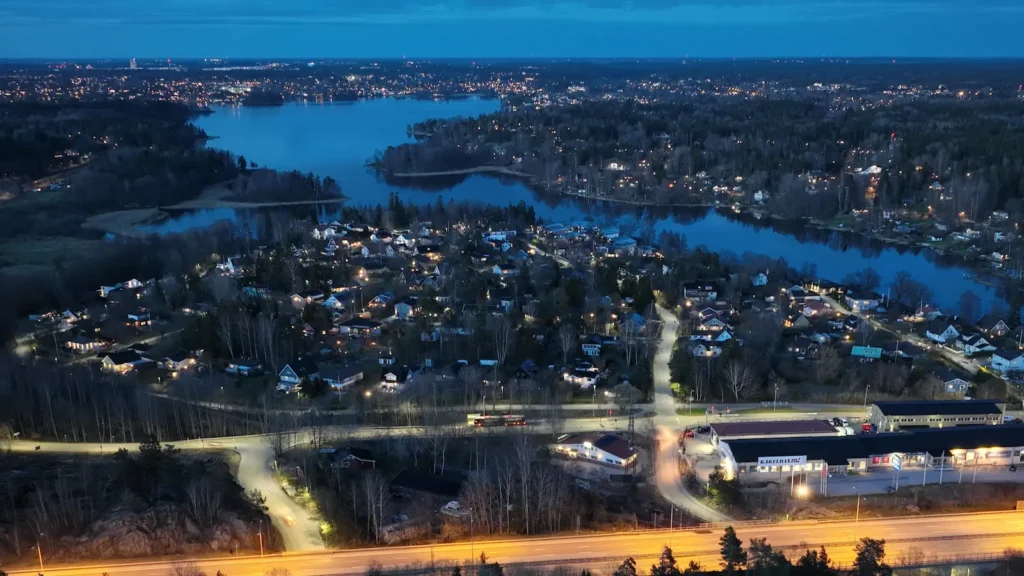
Aerial imagery for documentation and marketing
Aerial photography with drone Aerial imagery for documentation and marketing Aerial Photography with Drone –…
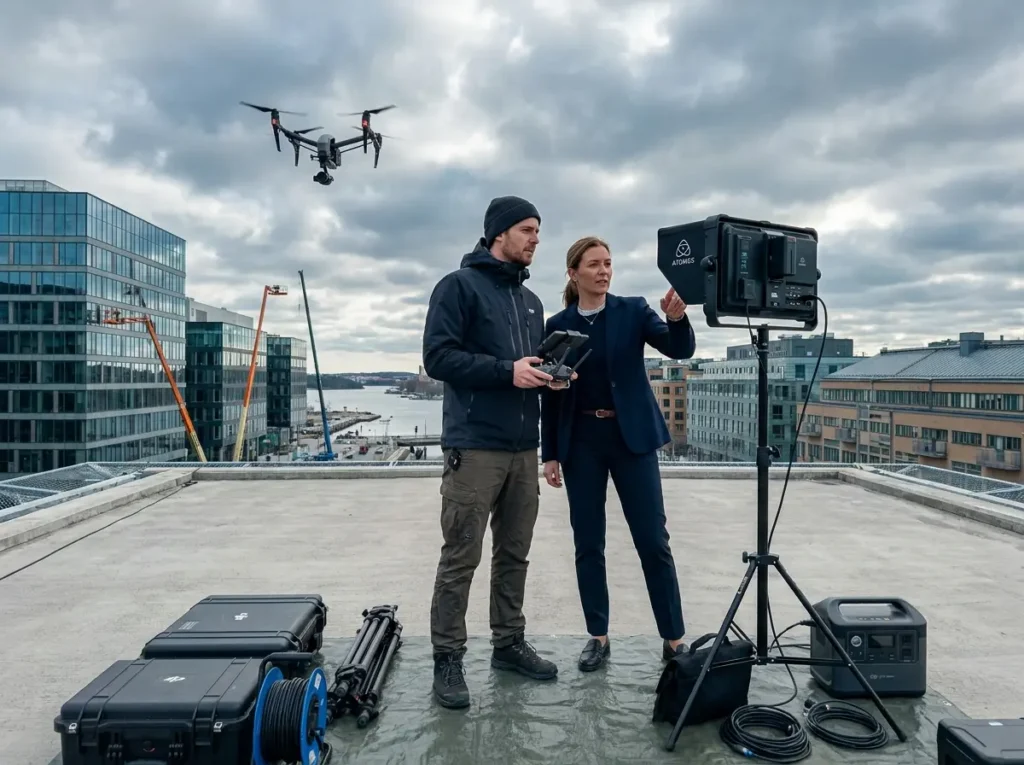
How drone filming works: a guide
Film with drone How drone filming works: a guide What Is Drone Film? Drone filming…
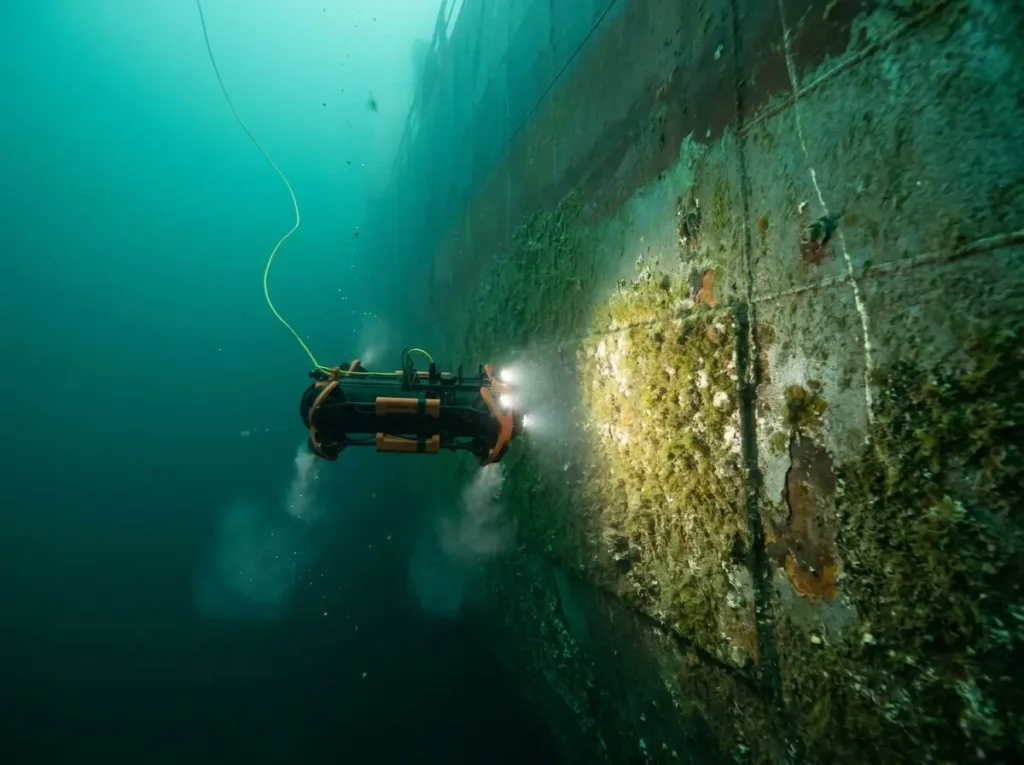
How ROV technology works in underwater inspection
ROV inspection How ROV technology works in underwater inspection We use the Chasing M2 Pro,…
Thermal drone inspections: conditions for reliable interpretation
Useful thermal drone inspections depend on temperature conditions, wind, solar radiation and surface materials. Reflective surfaces may display heat radiation from their surroundings, so a hot or cold area does not automatically indicate a defect. We assess conditions before the flight and select comparable viewing angles where possible. Thermal images can be combined with visible-light photographs so the location of each observation is clear. The resulting documentation helps prioritise further investigation, such as checking insulation, measuring moisture or inspecting individual joints. Thermal drone inspections do not replace a building physics investigation or testing of concealed structures. The appropriate next step depends on the observation and the building’s construction.
Thermal drone inspections and documentation
During thermal drone inspections, recording environmental conditions and matching thermal images with visual images helps identify the locations of observed temperature differences. When interpreting the results of thermal drone inspections, the responsible specialist considers surface properties, weather and operating conditions. Thermal imagery indicates patterns that may warrant further investigation; it does not automatically establish their cause.